
Can Workers’ Stories Really Change Things? Ask a DCYF Member

Stories are powerful! Have a story to share? Submit it here!
Jump to a section:
Putting workers at greater risk
Unions give us a chance to make our lives better. At the Department of Children, Youth, and Families (DCYF), WFSE members joined together to forever transform the way their agency treats workers after a serious incident has occurred in their work.
Charles Loeffler is a social worker at DCYF.

“It’s really rewarding when we get to see families start to transform and heal in lots of ways,” Loeffler says.
“That could be healing from addiction, healing from trauma that the parent has experienced or trauma that the child has experienced or even just healing relationships.”
The job makes real impact in families’ and children’s lives. But the toll it takes on the workers can be heavy.
Heavy tolls
In addition to heavy caseloads, many social workers experience critical incidents – the professional term used in high-stress careers in law enforcement, healthcare, and EMS for sudden and extremely distressing events that overwhelm an individual’s ability to cope.
For DCYF workers, critical incidents often involve child or parent fatalities or near fatalities, as well as serious attacks on social workers themselves.
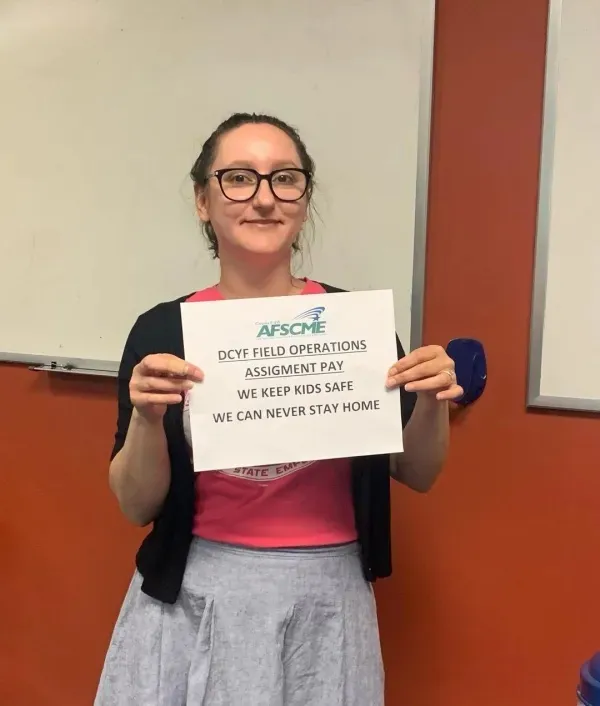
“Sometimes people would have a parent or child we are working with die and we would get an entirely new case on top of that in the same day,” said Jeanette Obelcz, social worker at DCYF and WFSE treasurer.
“Could you imagine just sitting there doing something else and all of a sudden an email pops up that says, ‘Hey, by the way, a kid on one of your cases died.’ That's just unreal.” Obelcz said.
Putting workers at greater risk
These experiences can be life-changing for their employees, but unlike other state agencies DCYF offered no leave to help workers process and heal.
Having time to recover and access professional support helps increase the likelihood an individual will remain functional and be able to return to their career, as well as avoid long-term harms like PTSD, depression, and substance-abuse.
The rate of critical incidents has increased substantially since the 2021 passage of the Keeping Families Together Act.
WFSE members at DCYF say that while the law is meant to increase the threshold for placing children in care and help more kids stay with their families, the effect is that it’s much harder to remove a child from a dangerous home.
“At the end of the day our paramount job is the child's safety, so we can't just stop working,” Loeffler said.
“But that really impacts morale and the belief that we can change things which we have to be able to access in ourselves to do this kind of heavy work.”
The only resource DCYF offered employees experiencing a critical incident was a volunteer-based peer support program. No alternate assignments or professional support was available.
Change takes time
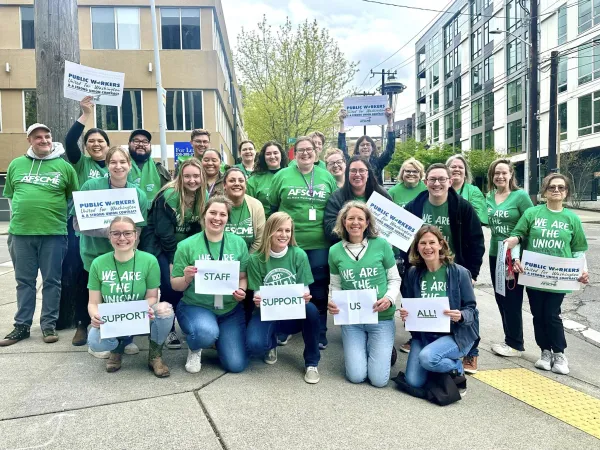
DCYF members knew something had to change.
They started where any good organizing campaign starts: they talked to their coworkers about the issues they were facing. It was clear that critical incidents were having a serious negative effect not only on employees, but on the important work they do.
At the end of the day, social workers are human beings, and these incidents affect them deeply.
“Do you really want a worker who has just gotten this awful news, whether it's a parent or a child or a caregiver, to go out and meet with the next family?” Obelcz asked.
“Or do you want them to be able to take a pause? Because it's not just the workers who deserve to be taken care of, but the families we work with.”
DCYF members began bringing their concerns to their agency leadership through union-management communication committee (UMCC) meetings. Though they repeatedly advocated for better policies around critical incidents, nothing changed.
The UMCC wasn’t their only avenue. Since they weren’t seeing the results they needed, member leaders then began laying the groundwork to make real change at the bargaining table.
Members submitted scores of bargaining proposals on the topic of critical incidents at DCYF leading up to the 2024 union contract negotiations.
The final sticking point
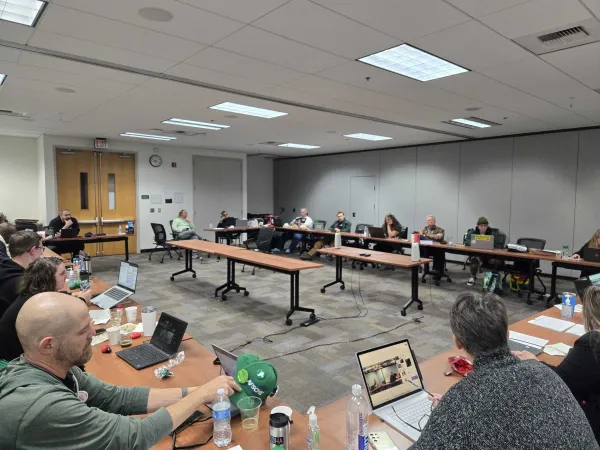
WFSE members at other agencies understood the seriousness of what DCYF members were facing, and they were equally determined to move the needle on this issue at the bargaining table.
“It ended up being the final sticking point in the whole general government contract negotiation,” Loeffler recalled.
Other agencies were asked to describe their own policies for when an employee experiences a serious event at work.
“We heard from Corrections and DSHS and all the other agencies, and they all had a psychologist on staff or some kind of leave, as well as debriefing and care for employees when something happened to them,” Obelcz said.
“And DCYF got up and reported out, and the only thing they could name was that they had a volunteer peer support system that people could access.”
Even the other agency representatives appeared to understand how inadequate this was.
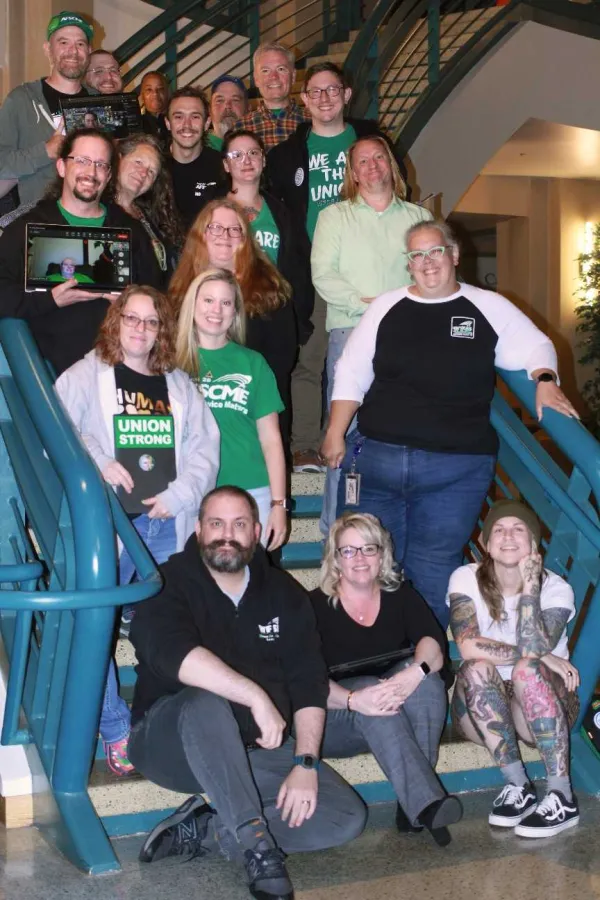
Finally, under pressure from both the WFSE bargaining team and fellow agency representatives, DCYF agreed to a memorandum of understanding (MOU) as part of the contract to develop a critical incident leave policy. The critical incident work group would include both management and WFSE members.
An uphill battle
Even after the major victory of the MOU, it was difficult to get agency leadership to make concrete changes. It took a sympathetic ally on the management side and continued pushing from WFSE members to make it happen.
DCYF member leaders gathered workers who had experienced critical incidents to learn what would have helped. They came up with a responsive approach fit to each worker’s need; some might want to continue working and stay busy, others might want leave, and others might want a different duty.
Thanks to the work group, the peer support program was expanded to include full-time staff, rather than workers who had been asked to volunteer.
A standard operating policy was also created.
More to do
The work isn’t over. Members at DCYF still need dedicated critical incident leave. Creating a policy is not the end of addressing these problems.
But at last, there is an improved critical incident policy, and avenues for change.
“These things can take a while, but that doesn't mean that it's impossible. And it starts with just talking to your coworkers,” Obelcz said.
DCYF members escalated their advocacy from the UMCC to the bargaining table, and Obelcz says workers are ready to take legislative action if needed.
“There was a time when we felt like we were just screaming into a void,” she said.
“But we kept pushing, and we kept going, and all of that previous advocacy ended up being incredibly useful.”
Obelcz also encourages members facing serious issues in their jobs to rely on the power of their stories.
“People can share their stories and experiences with the bargaining team, and those stories and those experiences do actually help a lot,” she said.
“We do use real-life stories at the table, and they do make an impact. I've seen management cry before from some of the stories that have been shared. It really does matter what you're seeing and what you're experiencing.”
Have a story to share? Submit it here!