
WA's Upside Down Tax Code and Structural Budget Deficit

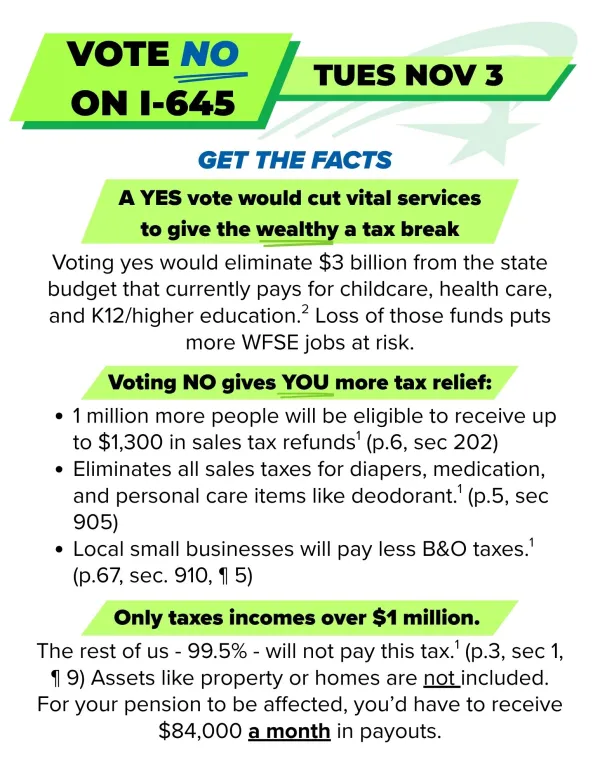
Click here to get the facts about I-645, the attempt to repeal the Millionaires' Tax on November 3rd. VOTE NO!
Find our complete endorsements here.
Washington state is next to last in the nation when it comes to tax fairness. We are 49 out of 50.
Budget shortfalls and cuts to services are baked into our tax system, and powerful special interests have fought to keep it that way.
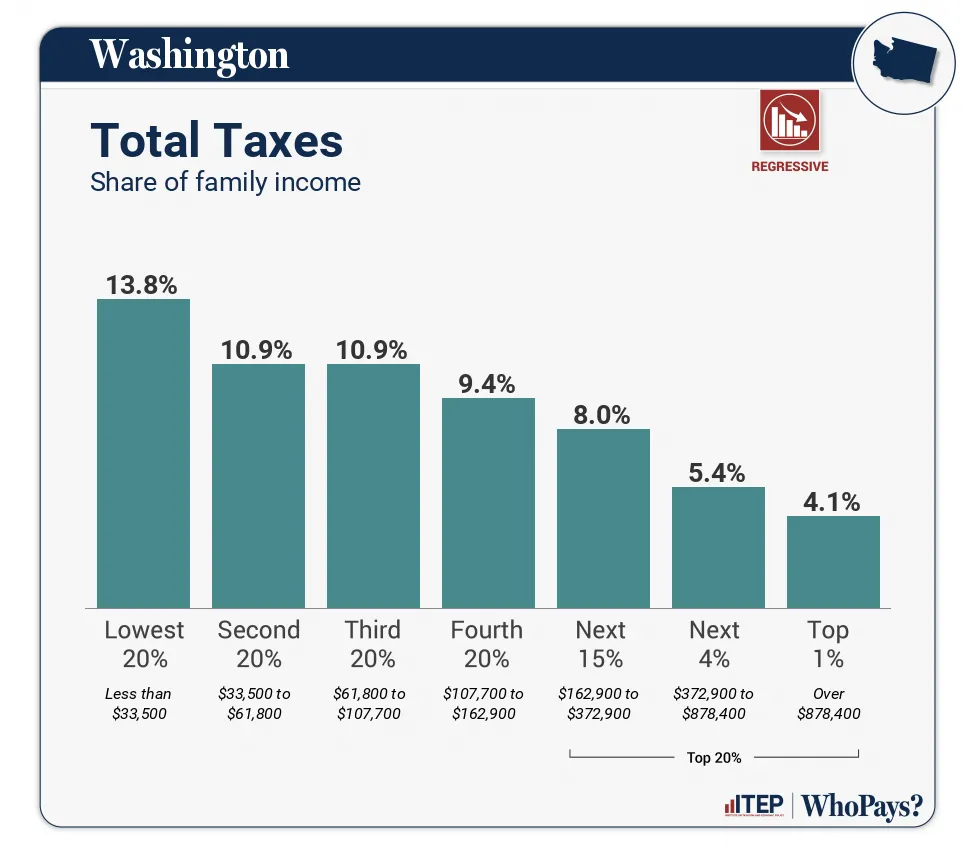
In Washington, we tax things that aren’t growing, like consumer spending by lower- and middle-class folks. We don’t tax things that are growing, like individual and corporate wealth.
Sales tax makes up half of all state revenue. It's both unfair and unstable.
Reliance on the sales tax allows rich people to get off easy and forces poor people to foot the bill. Sales tax returns are tailing down due to increased energy costs and inflation. Real estate excise tax returns as homes sales slow due to rising interest rates and unaffordable home prices.
In an age of runaway income inequality, a state budget based on how much money poor and working families spend is set up for failure.
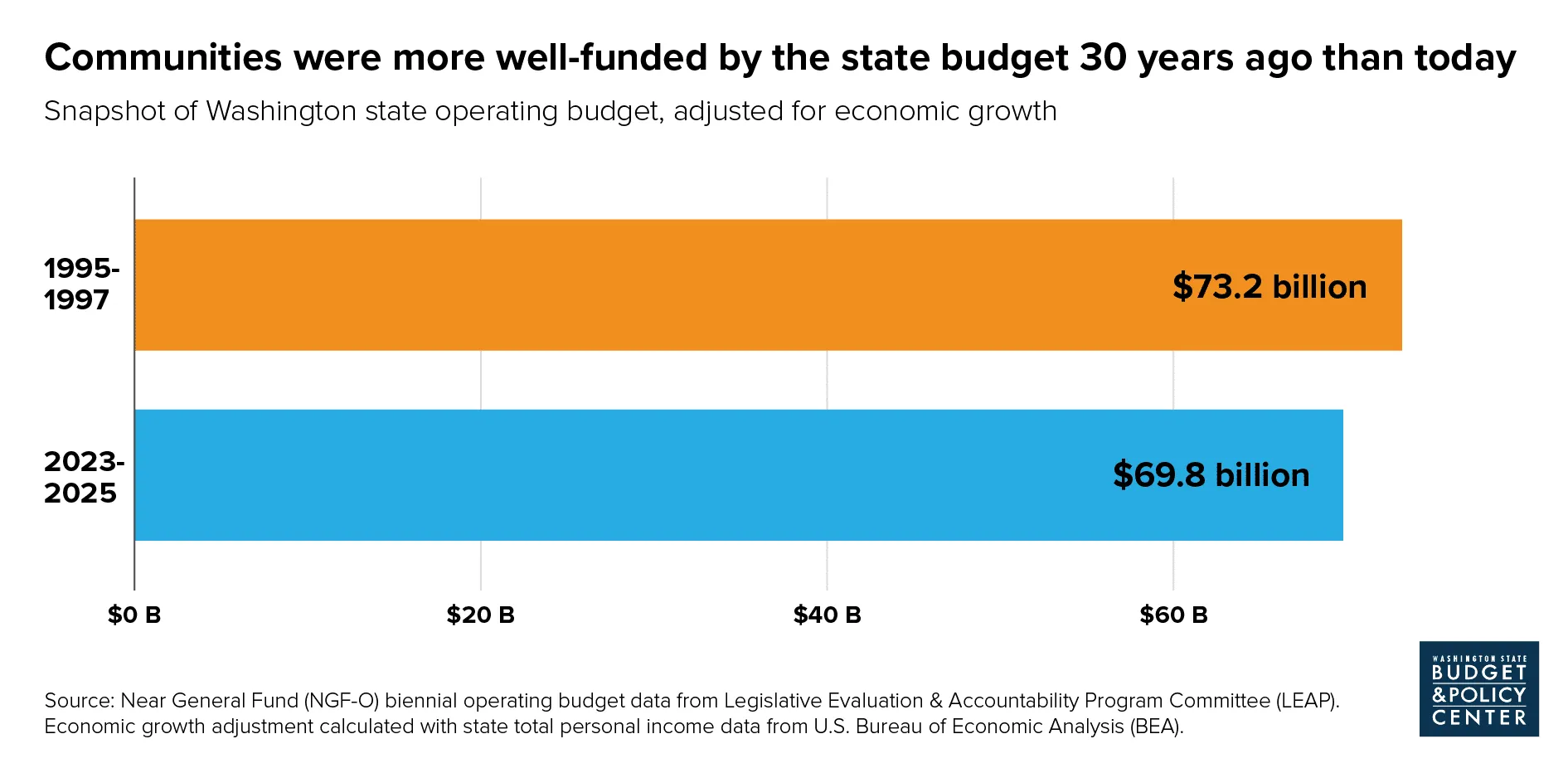
The state operating budget is smaller today than it was 30 years ago, when adjusted for inflation and economic growth.
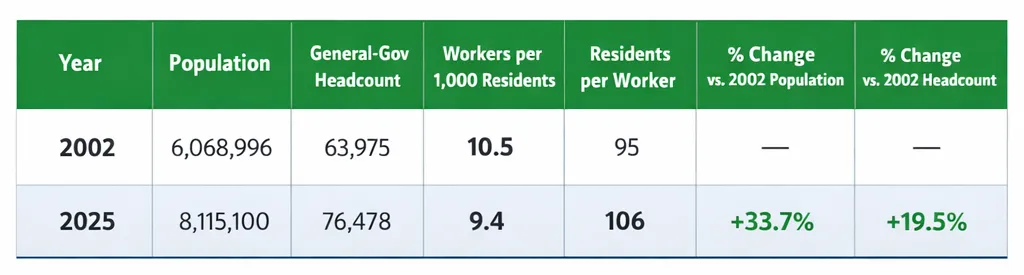
There are fewer state employees on the job to support each Washingtonian than there were 23 years ago.
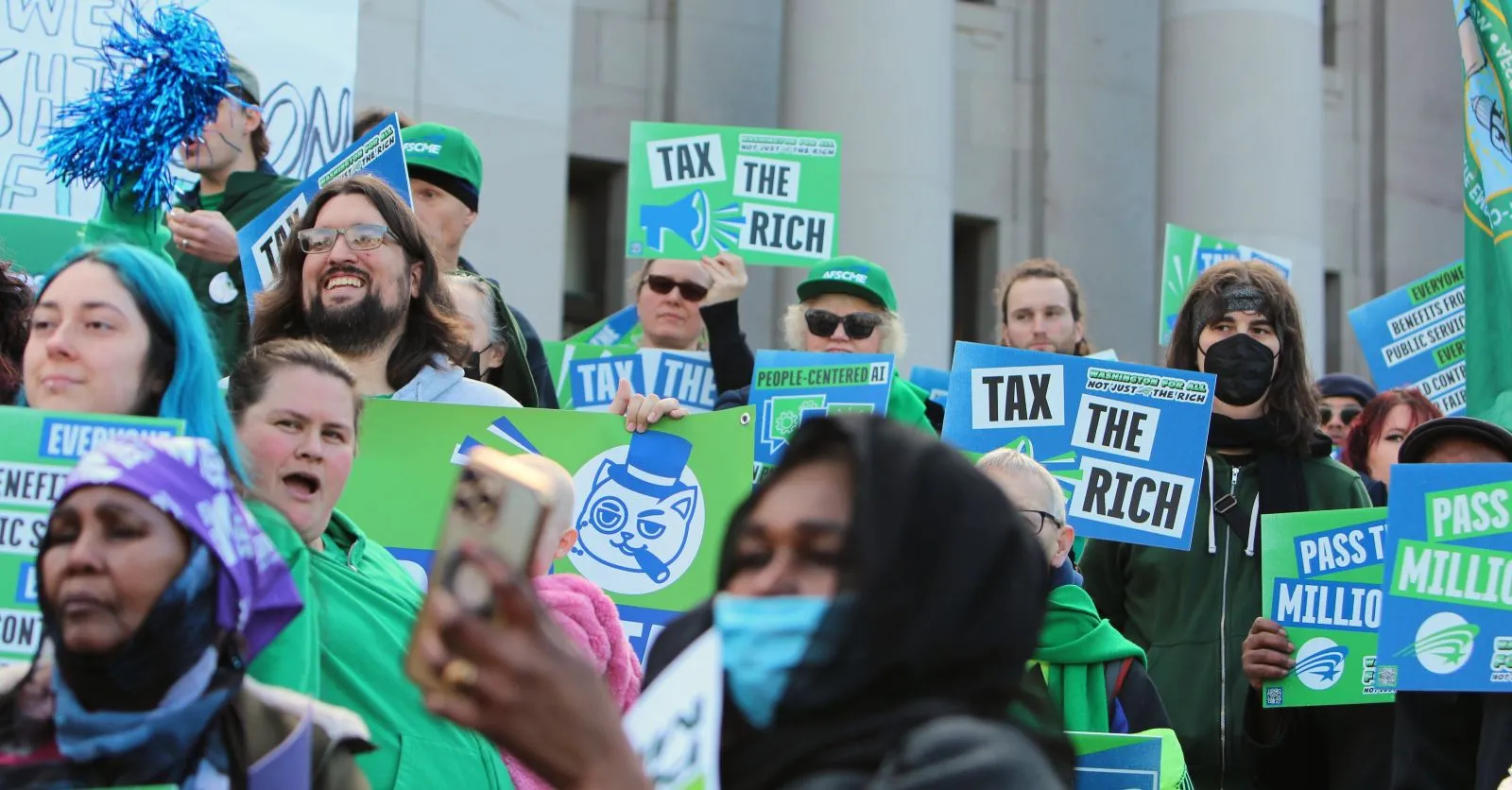
What we're up against
Our opposition is well-funded, organized, and intent on privatizing the work we do and reducing or eliminating taxes for the super-rich.
In Washington state, groups like Opt out Today (aka the Freedom Foundation) and Let's Go Washington aim to privatize public services and keep our state a tax haven for the rich.
In 2026, WFSE members helped Washington take the largest step in our history toward taxing the rich by passing the Millionaires' Tax — but Washingtonians will have to confirm it during the election in November 2026.
The Millionaires' Tax
Washington is facing a historic budget deficit. Historically, Washington has relied on slashing state services to address budget imbalances. We need a way to balance our budget before it’s balanced on state employees’ backs once again.
Currently, the wealthy do not pay their fair share in taxes: Low-income Washingtonians pay up to 14% of their income in taxes while the wealthiest pay just 4%.
The Millionaire’s Tax invests in Washingtonians and balances our unfair tax code so the 1% can finally start paying their fair share.
In November, there will be a ballot measure (I-645) to Repeal the Millionaire’s Tax. WFSE members have endorsed a NO vote on this measure. Below is information about how the Millionaire's Tax will and will not impact you.
what's in the bill:
Expands the Working Families Tax Credit so that over 1 million more are eligible to receive up to $1300 in sales tax refunds. 1 (p.6, sec 202)
Eliminates all sales taxes for diapers, medication, and hygiene and personal care items like deodorant. 1 (p.5, sec 905)
Small businesses making less than $250,000/year will no longer pay B&O taxes.1 (p.67, sec. 910, ¶ 5)
Free school lunch and breakfast for all students in Washington.1 (p.2, sec 1, ¶ 2)
Guarantees tax dollars for childcare and early learning.1 (p.2, sec 1, ¶ 5)
The Millionaires Tax will raise $3 billion each year for childcare, health care, and education all while lowering taxes for working families and small businesses. 2
what's not in the bill:
An income tax on 99.5% of Washingtonians.
Only households with income aver $1 million are subject to the tax. This does not include assets like property or homes.
The rest of us - 99.5% - will never pay this tax.1 (p.3, sec 1, ¶ 9)
MYTH: You will be the next person to pay this tax; this is a slippery slope to a broad income tax.
A yes vote would cut healthcare and education to give billionaires a tax break. This tax is also indexed for inflation ' updating each October of odd-numbered years.1 (p.13, sec 316)
MYTH: All of the people who pay this tax will leave to avoid paying.
Studies show the vast majority of wealthy individuals will not move due to tax break incentives, preferring to stay in their communities and homes.3
Nationwide, anti-worker billionaires and yes-men in Congress enacted the largest transfer of wealth in our country's history, cutting an estimated $1 trillion in Medicaid dollars over the next 10 years while giving the rich a tax break.
20,000 WFSE members jobs are funded by federal dollars in some capacity.
Our members in DSHS Community Services Offices who administer aid to needy Washingtonians already struggling to adapt to new work requirements for Medicaid, along with the people who depend on those funds.
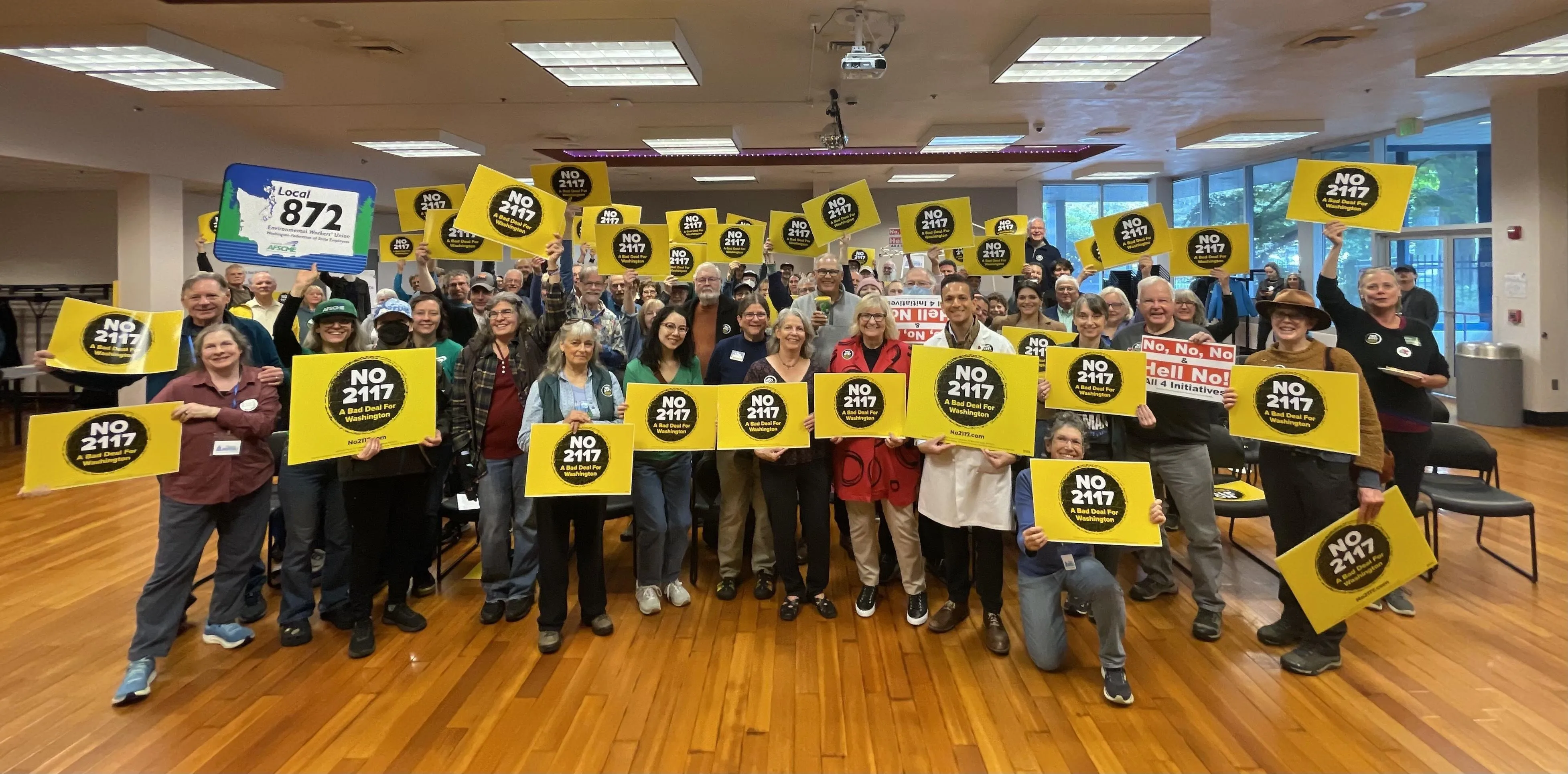
Washingtonians are ready for tax fairness
Few things are bipartisan these days. But taxing the wealthy is, at least here in Washington state.
- A majority of Washingtonians across political and geographic lines support a 9.9% tax on incomes on those above $1 million. (71% of Democrats, 54% of Republicans, and 52% of Independents) Source.
- 64% of Washingtonians rejected I-2109, an initiative run by the super-rich to give a tax cut to the richest 4,000 households -- literally just them. That same year, voters also rejected two other anti-worker initiatives that would have drained $9 billion from the state budget and pushed the burden of pollution and environmental cleanup from corporations onto working families.
Get involved in our Legislative and Political Action Program
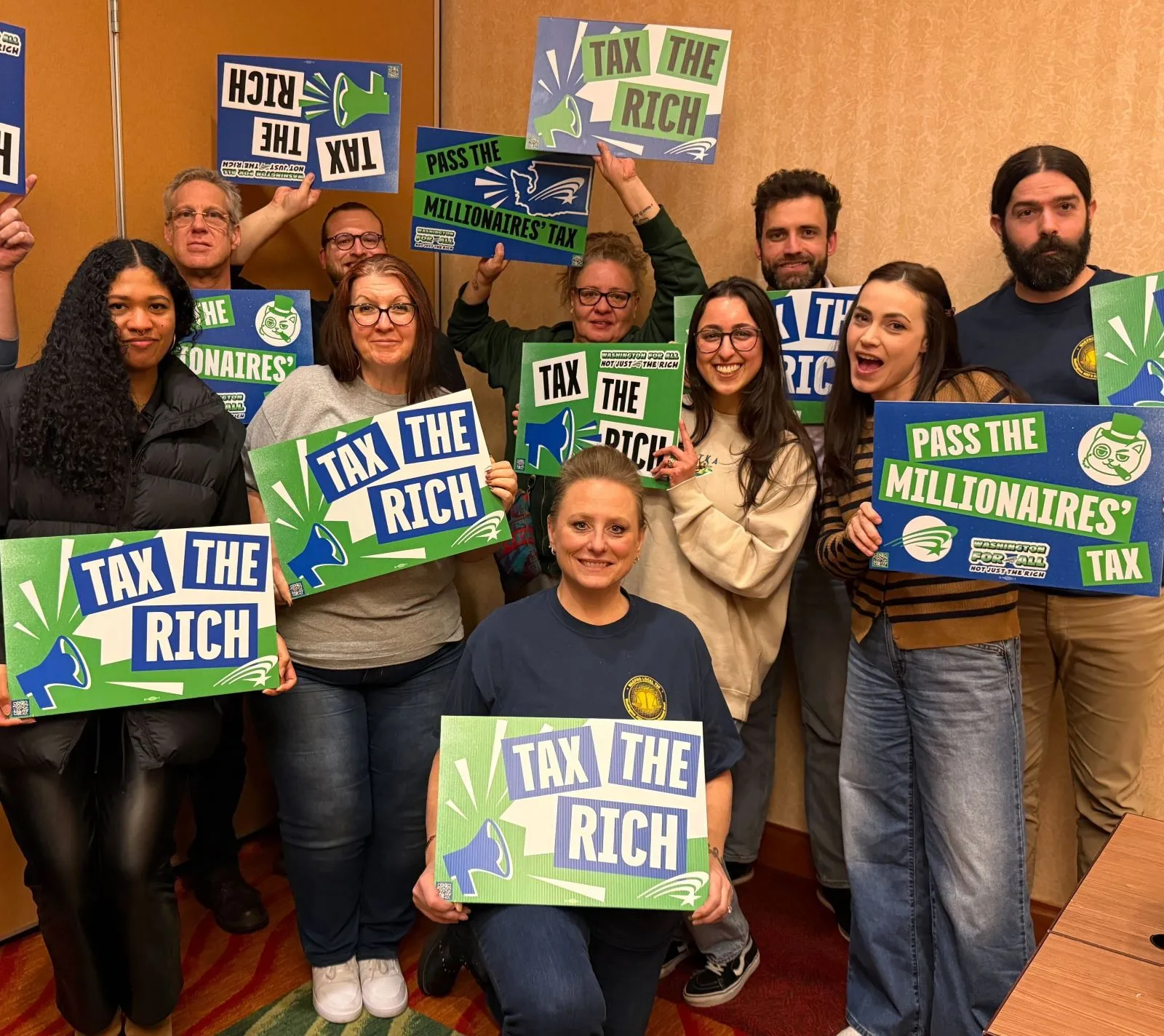
Every one of our members knows what the impacts of this upside-down system look like on the ground:
- There is a $1 billion maintenance backlog in our State Parks. Costs balloon the longer projects are deferred, and in many cases prevent our Parks from generating the revenue they should be generating.
- A workload study at the Department of Corrections found that they are down 200 positions, and there is a backlog of 13,000 warrants out for people who have violated supervision.
- Workers injured on the job face delays in getting compensation because case managers at the Dept of Labor and Industries can’t keep up with the workload.
- Assaults are a daily threat for DCYF child welfare workers and employees in our juvenile rehabilitation centers and behavioral health institutions due to short staffing and overcrowding. And it’s not just worker safety that suffers when we don’t have enough people to do the work Washington needs done.
- The youth in juvenile rehabilitation facilities suffer because there’s barely enough staff to keep the facilities open, let alone to provide rehabilitative programming they’re there to receive.
- Short-handed WSDOT highway maintenance crews mean more close calls with motorists and delays for the travelling public as minor maintenance is deferred and small problems become big problems that require closures.
1.) Engrossed Substitute Senate Bill 6346, no. 6346, Senate (2026). https://lawfilesext.leg.wa.gov/biennium/2025-26/Pdf/Bills/Senate%20Passed%20Legislature/6346-S.PL.pdf?q=20260514105038
2.) Office of Financial Management. Fiscal Notes, SB 6346,
(2026) bltps://fnspublic.ofm.wa.gov/FNSPublicSearch/Search/bill/63
3.) Young, Cristobal, and Ithai Lurie. “Taxing the Rich: How Incentives and Embeddedness Shape Millionaire Tax Flight.” American Journal of Sociology, vol. 131, no. 2, 12 June 2025,
https://doi.org/10.1086/737165.