
Lobby for 2026 Worker Priorities — Help Win a Washington for All!

Jump to:
- 2026 Legislative Victories
- Learn about the Millionaires Tax
- Weekly Legislative Updates
- Learn about Our Upside-Down Tax Code
2026 Legislative Victories
This year during a short legislative session, WFSE members attended 216 lobby shifts with their elected officials, a record for our union. We also 64 member lobbyists who took part in our member lobbying program for the first time!
Here's what we accomplished together:
- Passed SB 6346/HB 2724 (Pedersen/Fitzgibbon) - Establishing a tax on millionaires to help fix the second-most unfair tax code in the nation (behind only Florida.)
- Passed SB 5944/HB 2190 (Cortes/Cortes) - Gives Interpreters United/ WFSE Local 1671 members the right to bargain over compensation for missed or canceled appointments regardless of which agency they are interpreting for.
- Killed Section 602(44) of the House Operating Budget that sought a recommendation by November 1 to close at least one community or technical college (CTC). The final budget still seeks information about redundancy in our CTCs based on region, so we need to remain vigilant.
- Passed HB 2411 (Salahuddin) - Allows state employees to use shared leave if they or a family member are victims of a hate crime or an immigration enforcement action.
- Passed SB 6170 (King) - Raises the bid limit threshold for WSDOT highway maintenance work from $60K to $100K, from $100K to $160K in emergency circumstances, and indexes the emergency limit to inflation. · This long-needed change will protect our members' jobs and ensure more work is performed by skilled, union-represented maintenance crews.
- Passed HB 2218/SB 5847 (Ortiz-Self/Saldaña) - Authorizes hiring additional Labor & Industries claims managers to meet the recommended caseload of 141 and expands access to medical care in the workers’ compensation system.
- Passed HB 2249 (Salahuddin) - Removes the civil service exemption preventing the WATech Office of Cybersecurity from unionizing.
- Passed HB 2309 (Leavitt) - Adds postgraduate degrees to last year’s law eliminating unnecessary degree requirements in state government.
- Prevented a dangerous precedent of eroding collective bargaining rights to fill a budget deficit, when SB 6353 (Robinson) threatened to roll back rights for SEIU 925 childcare providers.
Read the complete legislative victories here.
The Millionaires Tax: What to Know
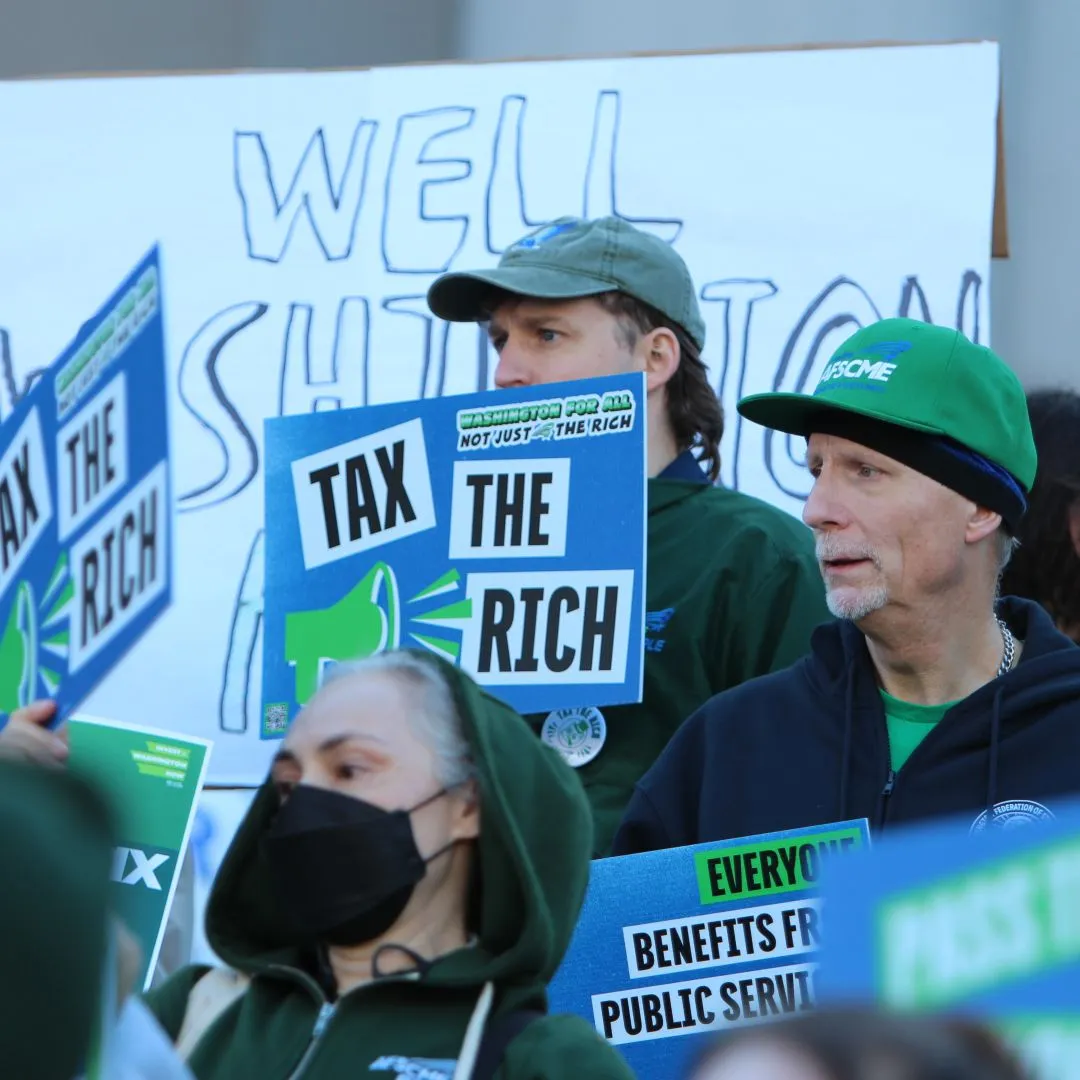
The Millionaires Tax targets individual earnings over $1 million a year at 9.9% and will generate an estimated $3.5 billion in revenue to fund the critical our members and other public servants provide.
Millionaire's Tax funds tax cuts for working families
The tax wouldn't only increase taxes for the richest 20,000 Washingtonians; it would also lower taxes for working families:
- No sales tax on grooming and hygiene products like shampoo and deodorant.
- Tax relief for small businesses (65% of businesses in the state)
- Expand the Working Families Tax Credit
With one of the most upside-down tax codes in the country, this tax is the most important step in state history toward rebalancing our tax code and stabilizing our state budget.
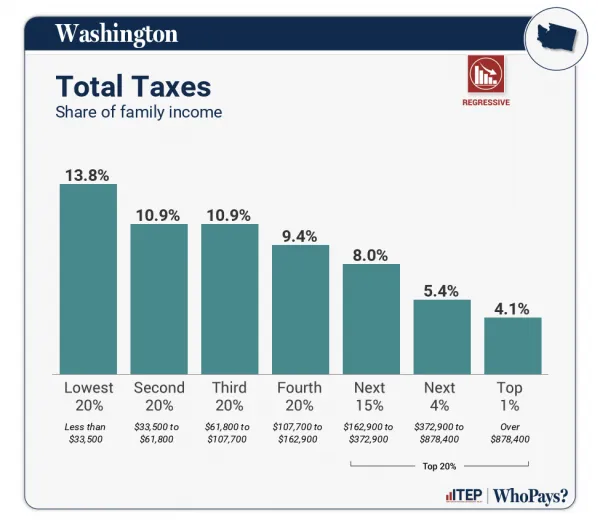
Currently, households with income in the bottom 20% pay 13.8% of their total income in taxes, while those with income in the top 1% pay only 4.1%. Only Florida has a more regressive tax structure than Washington.
Download the Millionaires Tax Info Sheet
Weekly Legislative Updates
Beginning the week of January 12, updates on our union's legislative priorities will be shared two ways every week:
- Via email to anyone subscribed to WFSE emails and posted below.
- Every Thursday at 5pm with our Legislative and Political Action Team on Teams (dues-paying members only)
If you are not receiving WFSE emails, you can subscribe here.
Creating a Washington for All, Not Just the Rich
Everyone should contribute to the services we provide
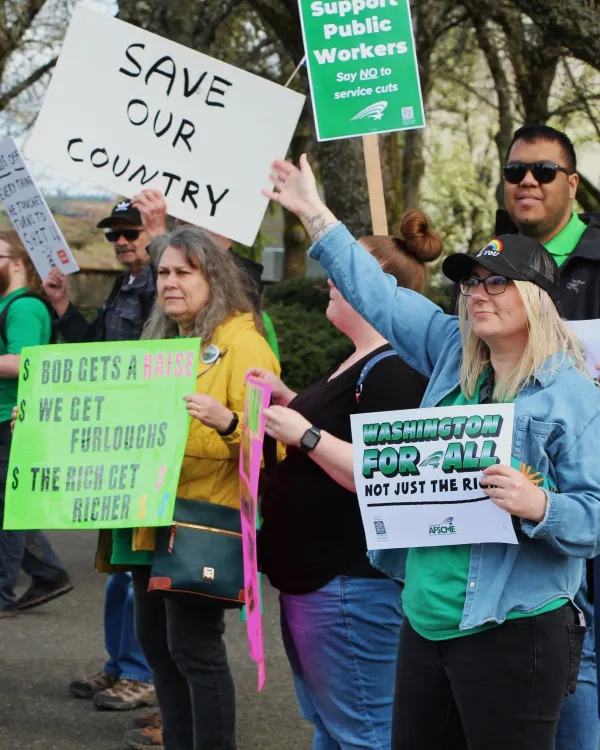
The state budget should not depend on the spending habits of poor and working families who are barely getting by. But that’s what we do here in Washington.
Because half of our state budget relies on sales tax, the richest 1% in Washington pay about 4% of their income in taxes. The average WFSE member pays nearly three times as much, around 11%.[1]
The result is boom and bust budget cycles where our pay and the services we provide are never adequately funded.
Meanwhile, the huge profits enjoyed by the super-rich and the largest corporations in our state are not taxed and do not go towards the services we all depend on.
Our message is simple: Everyone in Washington should have access to and benefit from public services, and everyone should help maintain them.
We want a Washington for all, not just the rich. That means shared responsibility for the services we all depend on.
Learn more about our upside-down tax code here and from our allies:
[1] https://itep.org/washington-who-pays-7th-edition/