
5 Ugly Stats | Compensation Proposal at General Government

Yesterday, your bargaining team shared our initial compensation proposals with the employer for our 2027-29 union contract.
It took a huge amount of work to get to this point:
- Years of contract proposals submitted by members.
- Months of research by our team’s lead negotiator and our class and compensation specialist.
- A two-day meeting earlier this month where we reviewed, discussed and voted on every idea our members put forward to improve our pay.
The “ground rules” of our negotiations means we can’t share the specific percentages or dollar figures of our proposals until we’ve reached a tentative agreement on the contract, but here’s what we can share:
Washington State is failing its workforce, and by extension, it is failing Washingtonians.
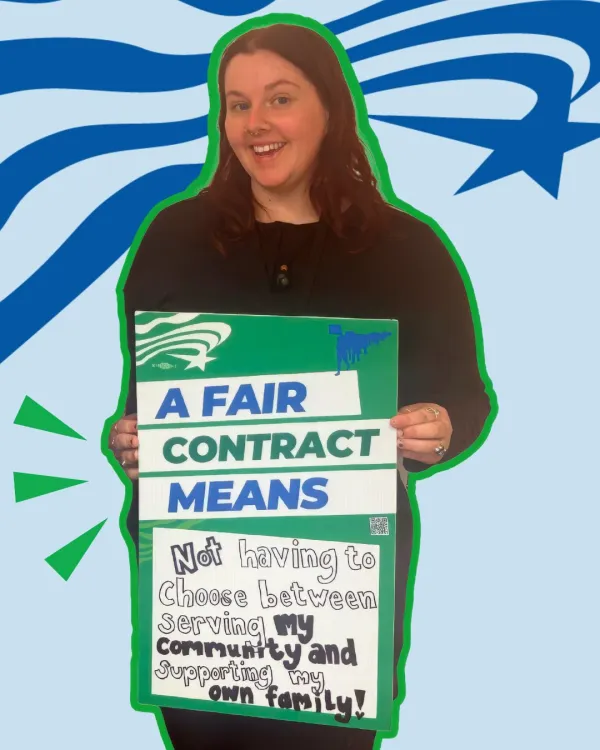
We shared figures and statistics that prove we are behind, but no statistic is as compelling as your personal story.
Fill out the short form below to share the value of the work you do and how stagnant pay impacts you and the people who depend on your work.
We’ve made huge strides in generating support in our communities since our statewide community outreach events on May 30. We’ll use your story to share with the public what’s at stake this round of negotiations and why this is their fight too.

Facts and Figures
We are being asked to do far more with drastically less, and the current pace is entirely unsustainable.
- Over the last five years, 54% of the state workforce has turned over, driven overwhelmingly by resignations. We are losing seasoned institutional knowledge and replacing it with a constant cycle of untrained workers.
- Between 2015 and 2025, Washington’s population jumped from 7.1 million to over 8.1 million. State workers are serving over 1 million more residents than a decade ago, with another 500,000 projected by 2030. We recently lost 6,000 FTE positions across state government. Our staffing-to-population ratio has slid all the way back to where we were during the peak of the Great Recession in 2010.
- Half of the workforce has less than five years of experience, with most in their first two years. Meanwhile, 25% of our workforce is nearing or eligible for retirement, and the group leaving at the highest rate is workers under 44—the very future of public service.
- According to the state’s own Employee Engagement Survey, while 71% of us are proud of the work of our agency, 40% intend to leave within five years, and 10% plan to leave within the year. Only 63% would actually recommend their own agency as a place to work.
The Cost of Inaction
The state’s refusal to stabilize the workforce with better pay is now costing $500 million a year.
When agencies can’t recruit and retain and employees are burning out with insane workloads, mistakes happen. Unmanageable workloads and high turnover directly contribute to skyrocketing lawsuits (tort claims).
It is both fiscally and morally irresponsible to keep pouring money into lawsuits instead of investing in the workers who keep the state running safely.
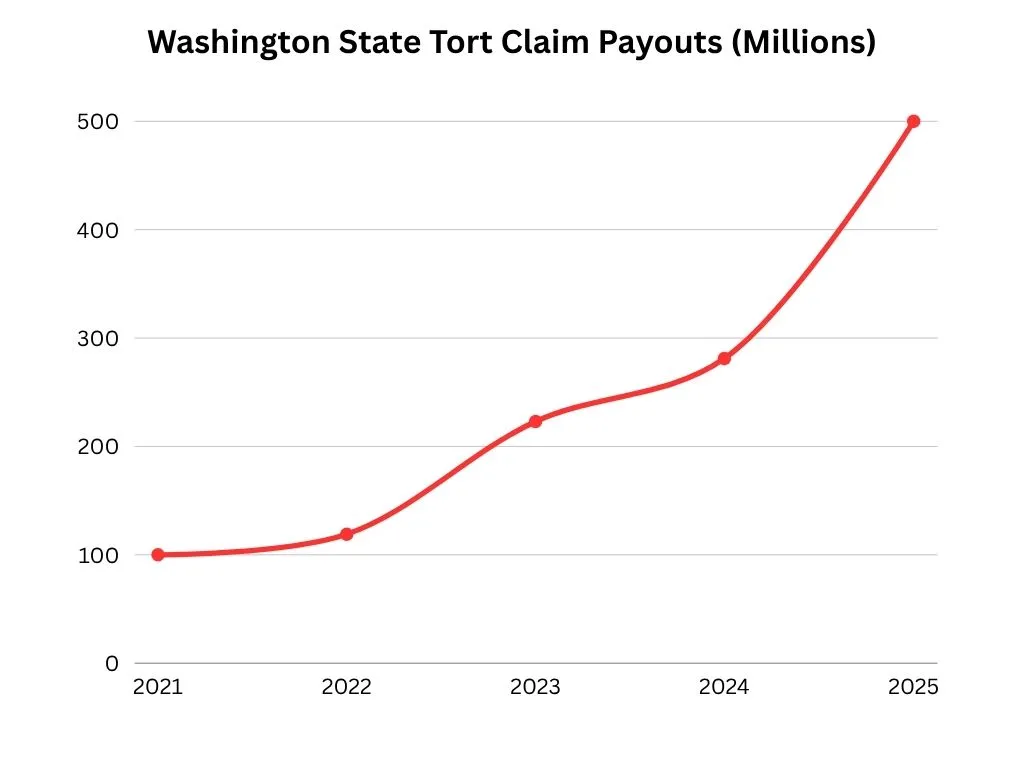
| Fiscal Year | Tort Claim Payouts |
|---|---|
| 2021 | ~$100 Million |
| 2022 | $119 Million |
| 2023 | $223 Million |
| 2024 | $281.1 Million |
| 2025 | $500 Million (Half a Billion) |
Next Up: The State’s Compensation Proposal
The economic forecast is due out June 26, giving the employer more than enough time to provide us with their compensation proposal at our July 15th meeting.
What they come to the table with will be revealing.
Governor Ferguson frequently states that his administration centers "the people" in every decision. Yesterday, we reminded his team of negotiators that the state workforce IS the people.
We are taxpayers, voters, neighbors and loved ones who want to see our tax dollars put to good use just like every other Washingtonian.
Share the value of your job and how better pay would help you do your job even better for the people who depend on it.
Turn up to your local union actions and make sure management hears our collective voice!